Search This Blog

USJ

https://affiliate.klook.com/redirect?aid=62622&aff_adid=857990&k_site=https%3A%2F%2Fwww.klook.com%2Fen-US%2Factivity%2F46604-universal-studios-japan-e-ticket-osaka-qr-code-direct-entry%2F
...

Today, I receive all God’s love for me. Today, I open myself to the unbounded, limitless, overflowing abundance of God’s Universe. Today, I open myself to your Blessings, healing and miracles.Today, I open myself to God’s Word so that I become more like Jesus Everyday. Today, I proclaim that I’m God’s Beloved, I’m God’s Servant, I’m God’s powerful champion, And because I am blessed, I will bless the world, In Jesus Name, Amen.

Featured Post

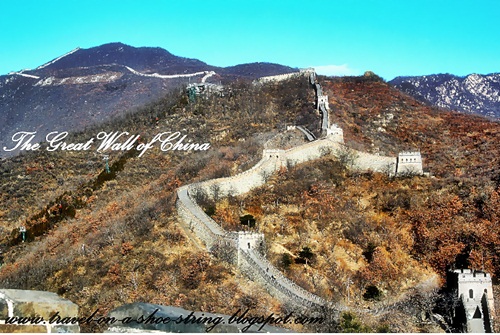
The Great Wall of China in Mutianyu

The Great Wall of China is referred to in Mandarin as Wanli Changcheng (10,000-Li Long Wall or simply very long wall) BEIJING, CHINA- S...

Saturday, December 11, 2010

WEST LAKE ADMISSION FEE AND TRANSPO


Travel Tips:
1. West Lake is a large open lake area with some scenic spots around it charging admission fee. For example:
SpotsAddr.Admission FeeBus Routes
Leifeng Pagoda15 Nanshan RoadCNY40Y1, Y2, Y3, K4, J5, Y6, Y7, Y9, K291, K504, K808, 822/K822
Three Pools Mirroring the Moonthe bigger islet in the southwest of the lakeCNY20----
Chenghuang Pavilion3 Wushan RoadCNY3038/K38, Y7, Y8, 8/K8, J9, 25/K25, 34/K34, 35/K35, 40/K40, 59/K59、60/K60
Lingyin1 Fayun Nong, Lingyin RoadCNY30 (Lingyin Temple)
CNY45 (Fei Lai Feng)
Y1, Y2, 7/K7, Y13, K807/K837

2. To the West Lake, visitors can easily find bus routes at Hangzhou Railway Station, Huanglong Sports Center, Wulin Square or Hangzhou East Railway Station, and get off at Su Di, Ling Yin, Duan Qiao, Qu Yuan Feng He, Yue Miao, Shuang Feng, Long Jing Si, Yan'an Road, Hu Bin or Xihu Dadao Stations. 

Available bus routes are 4/K4, 6/K6, 7/K7, 15/K15,16/K16,18/K18, 21/K21, 27/K27, 28/K28, 81/K81, K504, 527/K527, Y1, Y2, Y3, Y4, Y5, Y6, Y7, Y8, Y9.

3. Round-the-lake battery car: CNY40 per person

The battery car can stop at any place along the route and it takes about 70 minutes to round the lake.

4. Sightseeing bus: Y9 is double-decker tourism bus running around the West Lake. Ticket is CNY 5 for the whole journey. The starting and end point is Huanglong Tourism Dispatch Center. 

5. The free tourism bus line has been opened between the West Lake and Xixi Wetland. The bus starts from Leifeng Pagoda and departs every half an hour from 09:00 to 14:30, back from Xixi Wetland from 11:00 to 17:00. 

6. Free shuttle bus from Leifeng Pagoda to Hangzhou Polar Ocean Park is also available. There are four buses a day from 09:30, not timely though. The last bus leaves at 15:00 and will be back from the ocean park at 16:00. 


HANGZHOU WEST LAKE: Heaven on Earth


HANGZHOU WEST LAKE: Heaven on Earth 

I heard a lot of good things about Hangzhou in Eastern China. As an old Chinese saying declares, "There is heaven above, Suzhou and Hangzhou below." For the Chinese, Suzhou and neighboring Hangzhou are the closest things to Heaven on Earth.  

I wanted a glimpse of the piece of Heaven on Earth! Human as I am, I tend to be super excited about a new place that I've never been to before. So, I flew from Beijing to Hangzhou via China Eastern Airlines.
Marco Polo even called Hangzhou the most beautiful and magnificent in the world. 

This is most evident in the West Lake area--the effective, if not the geographic, center of Hangzhou. Hills embrace the lake on three sides. The city proper lies to the east.
Ancient Chinese people praised the West Lake area as a land of intoxicating beauty. 

Su Shi, a poet from the Song Dynasty, likened the lake to Xizi, a Chinese Cleopatra, for its allure. 

I gasped in awe when I first saw this scene while walking in Sudi, a 3 kilometer stretch that has the best view of the Famous West Lake.
Intoxicating beauty indeed
Ten (10) of the most beautiful sites include:
  1. Spring Dawn at Sudi Causeway
  2. Melting Snow at Broken Bridge
  3. Sunset Glow over Leifeng Hill
  4. Lotus in the Breeze at Crooked Courtyard
  5. Autumn Moon on Calm Lake (a lakeside park at the west end of the Bai Causeway)
  6. Listening to Orioles Singing in the Willows
  7. Viewing Fish and Lotus Ponds at Flower Harbor
  8. Evening Bell at Nanping Hill
  9. Three Pools Mirroring the Moon
  10. Twin Peaks Piercing the Clouds
The West Lake is like a shining pearl inlaid on the vast land of China, reputed for beautiful scenery, a multitude of historical sites, brilliant cultural relics, and a profusion of native products. Legend has it that the West Lake was a heavenly jewel fallen to earth. Pragmatists insist that it is a mere lagoon on Hangzhou's western fringe. In any case, West Lake has inspired painters for centuries.
Who would have thought that in ancient times, this place had been a shallow sea gulf before it evolved into a residual lake. The Baidi and Sudi causeways provide access to many parts of the lake. Most of the best known tourist sites lie around and within the lake. With a circumference of 15 kilometers , the lake area itself is easy for the visitor to negotiate.
My Hangzhou adventure still lingers in my mind. Hangzhou does not only have an intoxicating appeal but also very kind people!  I met a lot of angels who, despite the language barrier, had help me find my way around and did not expect anything in return. They're complete strangers, not even a Filipino, but the kindness in their hearts shines brightly. 


TEMPLE OF HEAVEN


The Temple of Heaven, literally the Altar of Heaven (simplified Chinese: 天坛; traditional Chinese: 天壇; pinyin: Tiāntán; Manchu: Abkai mukdehun) is a complex of Taoist buildings situated in the southeastern part of central Beijing. The complex was visited by the Emperorsof the Ming and Qing dynasties for annual ceremonies of prayer to Heaven for good harvest. It is regarded as a Taoist temple, although Chinese Heaven worship, especially by the reigning monarch of the day, pre-dates Taoism.

The temple complex was constructed from 1406 to 1420 during the reign of the Yong Le Emperor, who was also responsible for the construction of the Forbidden City in Beijing. The complex was extended and renamed Temple of Heaven during the reign of the Jiajing Emperorin the 16th century. The Jiajing Emperor also built three other prominent temples in Beijing, the Temple of Sun in the east (日坛), the Temple of Earth in the north (地坛), and the Temple of Moon in the west (月坛). The Temple of Heaven was renovated in the 18th century under the Qianlong Emperor.

In 1914, Yuan Shih-kai, then President of the Republic of China, performed a Ming prayer ceremony at the temple, as part of an effort to have himself declared Emperor of China.

The Temple of Heaven was inscribed as a UNESCO World Heritage Site in 1998 and was described as "a masterpiece of architecture and landscape design which simply and graphically illustrates a cosmogony of great importance for the evolution of one of the world’s great civilizations..." as the "symbolic layout and design of the Temple of Heaven had a profound influence on architecture and planning in the Far East over many centuries."

The surrounding of the Temple of Heaven is also a very popular park for exercising. If you go to the Temple of Heaven in the early morning, you can see groups of people practicing all types of kung fu and taiji. You can lso practice with them if you are so inclined. This is another good activity for the jetlagged.

The Temple grounds cover 2.73 km² of parkland and comprises three main groups of constructions, all built according to strict philosophical requirements:

The Hall of Prayer for Good Harvests (祈年殿) is a magnificent triple-gabled circular building, 36 metres in diameter and 38 metres tall, built on three levels of marble stone base, where the Emperor prayed for good harvests. The building is completely wooden, with no nails.
The Imperial Vault of Heaven (皇穹宇) is a single-gabled circular building, built on a single level of marble stone base. It is located south of the Hall of Prayer for Good Harvests and resembles it, but is smaller. It is surrounded by a smooth circular wall, the Echo Wall, that can transmit sounds over large distances. The Imperial Vault is connected to the Hall of Prayer by the Vermilion Steps Bridge, a 360 meter long raised walkway that slowly ascends from the Vault to the Hall of Prayer.


The Circular Mound Altar (圜丘坛) is the altar proper, located south of the Imperial Vault of Heaven. It is an empty circular platform on three levels of marble stones, where the Emperor prayed for favorable weather. It was built in 1530 by the Jiajing Emperor and rebuilt in 1740.

Address: on the east of Tianqiao, Chongwen District 67018866

Opening Time: 6:00-21:00
Take 6, 20, 39 Buses
Travel Time: 1.5 hours
Entrance Fee: RMB 35


SUMMER PALACE BEIJING


BEIJING SUMMER PALACE is a must see site. It is included on the list of UNESCO World Heritage sites. Summer Palace is a masterpiece of Chinese landscape garden design. The natural landscape of hills and open water is combined with artificial features such as pavilions, halls, palaces, temples and bridges to form a harmonious ensemble of outstanding aesthetic value. 

The North gate is easily accessible from Beigongmen Station on Line 4 of the Beijing Subway.

Located at the northwest suburb of Beijing, the Summer Palace was originally a royal garden and a temporary dwelling palace for emperors of Qing Dynasty. The Summer Palace in northwest suburban Beijing is the largest and most complete imperial garden existing in China.

Summer Palace mainly consists of Longevity Hill (Washoushan) and Kunming Lake. Covering an area of 290.8 hectares. Of which 3/4 is covered by water.

Hill-and water- surrounded palaces,temples and garden buildings are divided into three areas: 
  • the palace area, with the Hall of Benevolence and Longevity (Renshoudian) as the center, where Cixi held court from behind a screen in most time of her late years; 
  • the residence area, with Yulan Hall, Leshou Hall and Yiyun Hall as main bodies , where the emperor and empress lived before death; 
  • the tour area integrating landscape, buildings, flower and plants, a place of tour and rest for rulers of that time. As the building center in the whole Palaces, the Tower of Buddhist Incense (Foxiangge) stands highly relying on the Hill and facing to the water.
The water surface of Kunming Lake is spacious like sky, charming, gentle and appealing. In the vast mist- covered water stand the magic hills and wonder islands. 

The Seventeen-arch Bridge spans the green water like a rainbow. The West Dike of the lake runs from north to south. 

Forming a God-fiven scene together with six graceful bridges. Business on the palace market is flourishing. 

Towering palaces shine with the hill and water, Group peaks of West Hill (Xishan) and the Jade Spring (Yuquanshan) are even taken as the background.

With masterly design and artistic architecture and integration the essence of Chinese garden arts, the Summer Palace has a title of  "Imperial Garden Museum". It is an imperial garden most completely preserved with richest landscapes and concentrated buildings. 

It is a popular tourist destination but also serves as a recreational park.Add:

Yiheyuan (Summer Palace) Road, Haidian District 62881144-209Open Time: 6:30-20:30
Take busses No.726, 826, 718, 332, 331 or 737 and get of at Yiheyuan Dongmen
Entrance Fee: RMB 40 (low season) / RMB 50 (peak season)


THE CUBE IN BEIJING


The Beijing National Aquatics Center, also known as the National Aquatics Center, and nicknamed the Water Cube, (simplified Chinese: 北京国家游泳中心; traditional Chinese: 北京國家游泳中心) is an aquatics center that was built alongside Beijing National Stadium in the Olympic Green for the swimming competitions of the 2008 Summer Olympics. 

Despite its nickname, the building is not an actual cube, but a cuboid (a rectangular box). Ground was broken on December 24, 2003, and the Center was completed and handed over for use on January 28, 2008.  Swimmers at the Water Cube broke 25 world records during the 2008 Olympics.

The Water Cube's design was initiated by a team effort. The Chinese partners felt a square was more symbolic to Chinese culture and its relationship to the Bird's Nest stadium, while the Sydney based partners came up with the idea of covering the "cube" with bubbles, symbolising water. Contextually the cube symbolises earth whilst the circle (represented by the stadium) represents heaven. Hence symbolically the water cube references Chinese symbolic architecture.

Comprising a steel space frame, it is the largest ETFE clad structure in the world with over 100,000 m² of ETFE pillows that are only 0.2 mm (1/125 of an inch) in total thickness. The ETFE cladding allows more light and heat penetration than traditional glass, resulting in a 30% decrease in energy costs.

The outer wall is based on the Weaire–Phelan structure, a structure devised from the natural formation of bubbles in soap lather.

The structure had a capacity of 17,000 during the games that is being reduced to 6,000. It also has a total land surface of 65,000 square meters and will cover a total of 32,000 square metres (7.9 acres)

After the Olympics, the building underwent a 200 million Yuan revamp to turn half of its interior into a water park. The building officially re-opened on August 8, 2010


You might also like The Egg


Welcome


Travel, Photographs and Lifestyle Copyright © 2010 LKart Theme is Designed by Lasantha